
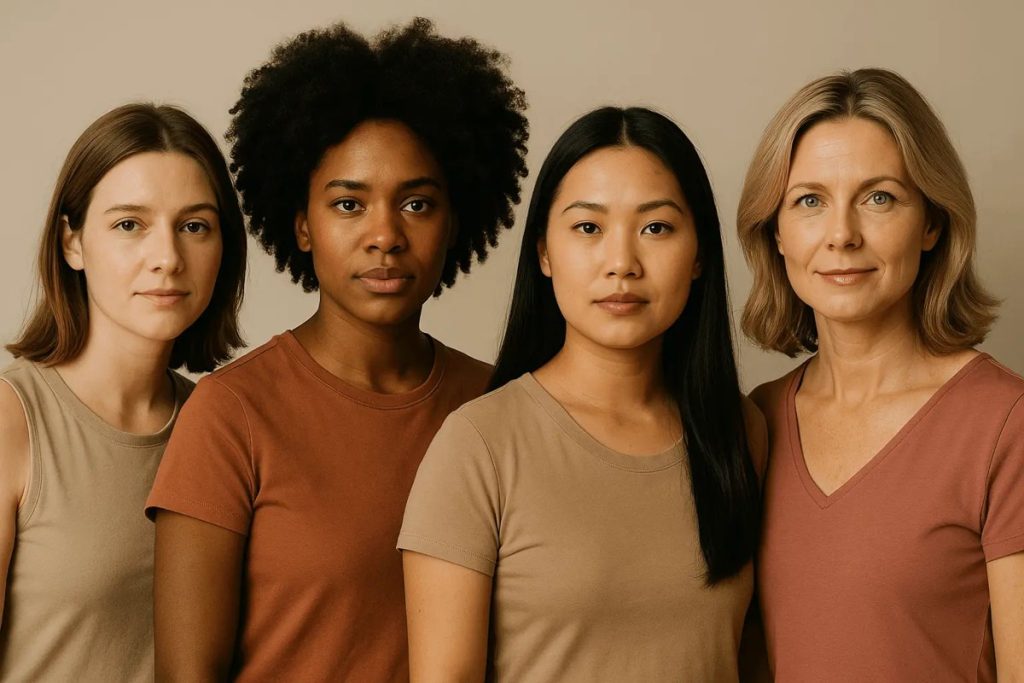
According to Ipsos’s 2021 “Women in Advertising” report, the vast majority of women want to see themselves reflected in advertising. Research by Inclusion & Marketing puts the figure at 81%. The striking part is this: only 12% of women feel that brands actually represent them in their ads.
“Seeing yourself” here does not simply mean spotting a woman on screen. Women want ads to reflect their own lives, values, bodies, ages, cultures and the many different roles they take on. In other words, instead of a single “idealized” type of woman, they want to see the diversity of real life.
This gap matters enormously. Worldwide, women make more than 70% of purchasing decisions. Their role is critical both in shopping for their own needs and in buying for the family. Brands that ignore what women expect therefore risk losing the largest source of purchasing power there is.
The Purchasing Power of Women Consumers
According to Boston Consulting Group data, women’s influence on global consumer spending is measured in trillions of dollars. In home, health, education, fashion and food, and even in sectors seen as “male-dominated” such as automotive, women play a decisive role in the buying decision. When a brand fails to represent women accurately in its advertising, the result is a direct loss of sales.
The Lack of Representation in Advertising
According to a report by the Geena Davis Institute on Gender in Media, advertising is still largely full of stereotypes. Female characters are usually shown doing housework, in mother roles or in appearance-focused scenarios. The lack of diversity is also very clear: different age groups, body types and ethnic identities are barely represented.
Ipsos’s GEM® index shows that when ads use positive, modern portrayals of women, ad recall goes up, people are more likely to connect with the brand and purchase intent becomes stronger. This shows that making women feel represented is not just “social responsibility” for a brand. It has direct commercial value.
The Link Between Diversity and Brand Trust
In a global study by Meta, 54% of consumers said they did not feel culturally represented in advertising. Brands that offered diversity, on the other hand, earned more loyalty and preference.
Dove’s “Real Beauty” campaign is the best-known example. Featuring real women of different ages, body types and cultures, the campaign did not just drive a significant increase in sales. It also strengthened Dove’s brand perception on a global scale. This example proves how women’s desire to see themselves in ads translates into a direct benefit for the brand.
Why Do Only 12% of Brands Get It Right?
- Stereotypes: The advertising industry still produces visuals built around an “ideal beauty” standard.
- Decision-making: Women may be underrepresented in the teams that set advertising strategy.
- Lack of local research: Global brands do not fully understand what women expect in different cultures. In Turkey or the Middle East, for example, different values may come to the fore.
- Short-term thinking: Treating representation as a mere “PR move” and never turning it into a sustainable strategy.
Strategic Solutions: How Brands Can Turn This Gap Into an Advantage
Increase Diversity in Your Ads
Using models who reflect different ages, body types, ethnic identities and lifestyles makes a big difference. Showing women not only as “mothers” or as a “beauty element” but in a range of roles, such as leaders, entrepreneurs, professionals and athletes, makes a brand more inclusive.
Visuals and Stories That Speak to Women Consumers
Research shows that ads that build an emotional connection are remembered 70% more. By creating stories that speak to women’s daily lives, needs and values, brands can build a strong bond with their customers.
Research Your Local Market
What women in Turkey expect may differ from what women in the US expect. Focus groups, surveys and social media analysis should be used to build a profile of the local female consumer, and ads should be adapted accordingly.
Measure Representation as a KPI
Beyond views and clicks, the question “Do I feel represented in this ad?” should also be measured as a KPI. This data should then be built into long-term brand strategy.
Conclusion: Brands That See Women’s Power Win
The data is very clear: women make most purchasing decisions. 81% want to see themselves in ads, but only 12% feel truly represented. This gap is a major risk for brands, and at the same time a major opportunity.
Brands that get representation right do not just build stronger relationships with women consumers. They also pull ahead of competitors in sales, brand loyalty and trust.
If your brand wants to build a stronger connection with women consumers, put diversity at the heart of its marketing strategy and achieve sustainable growth, get in touch with us.